The global Software as a Service (SaaS) market is on a remarkable growth trajectory. According to research by Fortune Business Insights, the market is expected to expand from $317.55 billion in 2024 to an astounding $1,228.87 billion by 2032, achieving a compound annual growth rate (CAGR) of 18.4%. For SaaS startups and IT consulting firms building B2B applications, this growth represents a golden opportunity to scale, innovate, and claim a share of this booming industry.
However, thriving in this competitive landscape isn’t just about having a cutting-edge product. It’s about addressing the unique challenges of B2B SaaS marketing—educating a highly discerning audience, engaging decision-makers, and converting leads into loyal customers. In an industry where buyers demand technical expertise and demonstrable value, content marketing emerges as the linchpin of success. Yet, it’s an often-underutilized strategy in the SaaS growth playbook.
Here’s the reality: many businesses struggle with creating a robust content strategy. Uncertainty about content ROI and frustration over delayed outcomes lead some to deprioritize it altogether. Others skip crucial steps like planning and audience research, jumping straight into content creation without a clear focus. While this approach may yield sporadic results, it often fails to deliver sustainable growth, leaving businesses with inconsistent messaging and misaligned buyer targeting.
In today’s digital-first economy, a well-executed content marketing strategy isn’t optional for SaaS businesses—it’s essential. Research shows that companies with documented content strategies generate three times more leads than those relying on traditional marketing methods and do so at a cost up to 62% lower.
In this guide to B2B SaaS Content Marketing Strategy, we’ll provide actionable insights and resources to help you craft a winning content plan. Whether it’s boosting your organic visibility, driving qualified traffic, or enhancing conversion rates, this strategy will empower your SaaS brand to stand out in a crowded market and achieve measurable results. With the right approach, you can transform your content into a growth engine that not only informs but also inspires your audience.
What is B2B Content Marketing?
B2B content marketing is a strategic approach designed to educate, inform, and engage your target audience, helping them make informed purchasing decisions about your products or services. Unlike B2C marketing, where emotional appeal often drives decisions, B2B content marketing focuses on building trust and demonstrating value through meaningful, informative content tailored to business audiences.
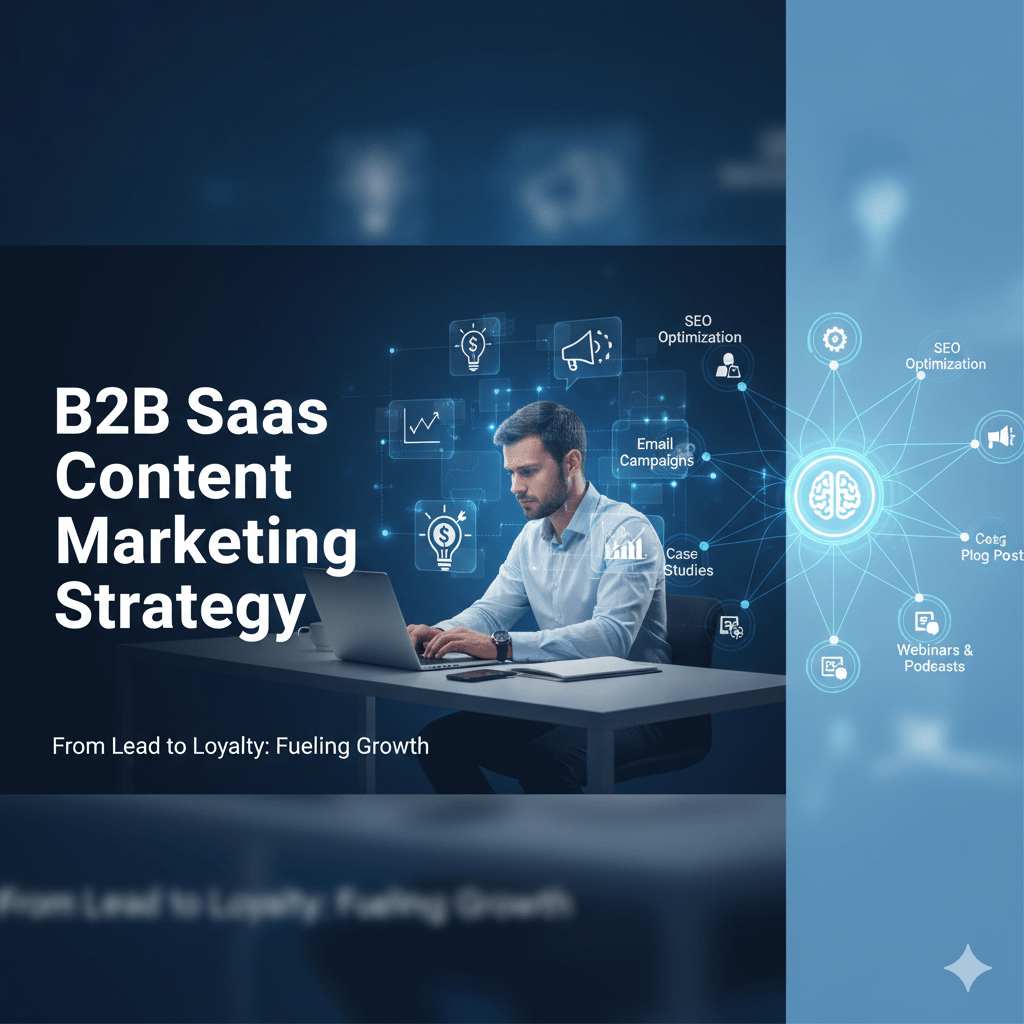
For B2B SaaS companies, content marketing extends far beyond blogs or social media posts. It involves creating a cohesive ecosystem of content across various channels, including:
- Emails to nurture leads and keep existing customers engaged.
- eBooks and whitepapers to establish thought leadership.
- Webinars to address specific pain points and offer solutions in real time.
- Landing pages optimized for conversions.
- Advertisements that resonate with target personas.
Every piece of content serves as a touchpoint that guides prospects through the buyer’s journey—from awareness to consideration and finally, decision-making.
Why should B2B SaaS Companies Invest in Content Marketing?
For B2B SaaS companies, content marketing isn’t just about driving clicks or quick wins; it’s a long-term strategy aimed at building trust, simplifying complex sales cycles, and engaging multiple decision-makers. Unlike traditional marketing, it focuses on delivering value and fostering relationships that lead to sustainable business growth.
Here’s why you should invest in content marketing:
Increased Brand Awareness: Consistent, high-value content positions your business as a thought leader, enhancing visibility and credibility within your industry.
Enhanced Customer Engagement: By addressing the specific pain points and needs of your audience, you foster stronger connections, encourage loyalty, and build lasting relationships.
Lead Generation and Nurturing: Valuable content attracts potential customers and nurtures them throughout the buyer’s journey. By aligning your messaging with their challenges, you can seamlessly move prospects through the funnel.
Improved Sales Alignment: A well-coordinated content strategy supports your sales team by providing them with the resources they need to address customer concerns, close deals, and build rapport with decision-makers.
Increased Trust and Credibility: Informative and relevant content demonstrates your expertise, making you the preferred partner for businesses seeking knowledgeable and reliable vendors.
How Content Marketing Delivers Results for SaaS
Educating Buyers: Research shows that nearly 50% of B2B buyers review multiple pieces of content before contacting sales. This ensures prospects are informed and more likely to engage, shortening the sales cycle.
Building Trust: By offering reliable and insightful content, your brand establishes itself as an authoritative voice, making buyers confident in choosing your solution over competitors.
Driving Sustainable Growth: SEO-optimized, evergreen content—like blog posts and eBooks—continues to generate leads and traffic long after publication, compounding ROI over time.
What Data Suggests about Content Marketing Strategies
Insights from the Content Marketing Institute demonstrate the increasing importance of content marketing:
- 58% of B2B marketers attribute sales and revenue growth to content marketing in 2024, a significant jump from 42% in 2023.
- 69% of businesses with a documented content strategy rank themselves as top performers in their industry.
Investing in B2B content marketing isn’t just about staying competitive—it’s about future-proofing your business. By educating your audience, building trust, and delivering sustained value, your content becomes a powerful engine for growth, helping you attract, engage, and retain customers in an increasingly crowded market.
Key Pillars of a High-Impact SaaS Content Marketing Strategy
Identify the Buyer’s Persona
Every successful B2B content marketing strategy begins with a deep understanding of your buyer persona. A buyer persona isn’t just a profile; it’s a detailed representation of your ideal customer, capturing their needs, desires, pain points, and decision-making processes. It’s the blueprint for creating content that truly resonates, ensuring your efforts hit the mark with your target audience.
Understanding your buyer persona is the key to crafting content that connects on a personal level. To create accurate buyer personas, you need a combination of research, collaboration, and real-world insights. For this, you need to engage your frontline teams — sales reps, customer service representatives, and account managers. These individuals interact with customers daily and can provide valuable insights into common questions, recurring challenges, and purchasing roadblocks.
Content Creation for all Stages of the Funnel
Before diving deep into content creation, let’s understand the marketing funnel. Here’s a breakdown of the top, middle, and bottom of the funnel content, along with examples of what content fits where:
Top of the Funnel (ToFu): Awareness Stage
Goal: Attract a broad audience and generate awareness about a problem, challenge, or interest.
Content Characteristics:
- Educational and informational
- Broad in scope, appealing to a large audience
- Not promotional; instead, it builds trust
Content Examples:
- Social Media Content: Posts addressing common pain points or trends
- Blog posts: “Top 10 AI Trends in 2024”
- Infographics: Visual summaries of complex topics
- How-to Guides: “How to Identify the Right ERP System for Your Business”
- eBooks and White Papers: Downloadable resources like “Beginner’s Guide to SEO”
- Videos and Webinars: Explainers or industry insights
Middle of the Funnel (MoFu): Consideration Stage
Goal: Nurture leads by providing solutions and building relationships.
Content Characteristics:
- Solution-focused but still not overtly promotional
- Helps audiences evaluate options
- Builds authority and expertise
Content Examples:
- Case Studies: “How X Company Reduced Costs with Our Services”
- Product Comparison Guides: “Our ERP vs Competitor ERP: A Detailed Comparison”
- Webinars: Educational but more detailed and focused on solutions
- Templates and Tools: Resources like content calendars, budgeting spreadsheets, or calculators
- In-depth Blogs or eBooks: Focused on specific problems, e.g., “The Ultimate Guide to Automating Test Processes”
- Email Newsletters: Targeted educational content
Bottom of the Funnel (BoFu): Decision Stage
Goal: Convert leads into customers by demonstrating why your product or service is the best fit.
Content Characteristics:
- Highly targeted and promotional
- Focused on closing the deal
Content Examples:
- Product Demos: Live or recorded demonstrations
- Testimonials and Reviews: User experiences that build trust
- Free Trials or Discounts: Incentives to act
- Comparison Sheets: Detailed competitive analysis
- FAQs: Addressing final objections or concerns
- Success Stories: Real-life results from using your product or service
- Consultation Offers: “Book a Free Consultation”
Content Distribution
Creating great content is only half the battle. For your content to drive real results, it must reach the right audience at the right time. Content distribution is the bridge that connects your message to your audience, making it a critical component of any B2B SaaS content marketing strategy. Here’s how to maximize your content’s reach and engagement across different distribution channels:
Owned Channels
Owned channels are the foundation of your content distribution strategy. These are platforms that you control, allowing you to build a consistent and branded experience for your audience.
- Website and Blog: Your website is often the first touchpoint for potential customers. Optimize it for user experience and ensure your content is easily accessible.
- Email Newsletters: Email remains one of the highest ROI channels. Use personalized and segmented email campaigns to share your latest blogs, product updates, or exclusive resources like eBooks.
Social Media Channels
Social media platforms are powerful tools for amplifying your content’s reach, especially in the B2B landscape.
- LinkedIn: A must-use platform for B2B marketers. Share thought leadership pieces, case studies, and event promotions to engage with decision-makers and industry peers.
- Twitter: Ideal for sharing quick insights, engaging in industry conversations, and driving traffic to your content.
- YouTube: If your content includes video tutorials or webinars, YouTube can significantly expand your reach.
Paid Media
Paid promotion is essential for cutting through the noise and reaching a highly targeted audience.
- Search Engine Marketing (SEM): Use Google Ads to promote your content to users actively searching for solutions you offer.
- Display Advertising: Engage potential customers with visual ads on industry-specific websites.
- Social Media Ads: Platforms like LinkedIn and Facebook allow you to target niche audiences based on demographics, job roles, and interests. Paid ads are particularly effective for promoting high-value content like whitepapers, webinars, and eBooks.
Partnerships and Collaborations
Strategic partnerships with industry organizations or influencers can dramatically expand your reach.
Co-Branded Content: Collaborate on webinars, reports, or guides with partners to tap into their audience.
Guest Posts and Features: Write for authoritative industry blogs or invite experts to contribute to your platform, enhancing credibility and visibility.
Affiliate and Referral Networks: Encourage partners or affiliates to share your content with their networks in exchange for mutual value.
Track Channel Results
A successful B2B content marketing strategy doesn’t stop at creating and distributing content—it thrives on continuous improvement. Tracking the performance of your content across all distribution channels is crucial to understanding what resonates with your audience and optimizing your efforts for better results.
Monitoring content performance provides actionable insights into:
- Reach: Are you successfully getting your content in front of the right audience?
- Engagement: Are people interacting with your content by liking, sharing, commenting, or clicking?
- Conversions: Is your content driving the desired actions, such as sign-ups, downloads, or purchases?
- ROI: Are your distribution efforts delivering measurable business outcomes?
By analyzing these metrics, you can refine your strategy, allocate resources more effectively, and ultimately, achieve greater success.
Here’s a breakdown of tools to measure the impact of your content across different formats and channels:
For Blogs and Organic Content
- Google Analytics: Track page views, bounce rates, average session duration, and goal completions to understand how visitors engage with your blog posts.
- Google Search Console: Monitor impressions, clicks, and keyword rankings to assess your organic search performance.
Pro Tip: Set up goals in Google Analytics to measure specific actions, like time spent on a blog or clicks on a CTA (Call-to-Action).
For Downloadable Assets (eBooks, Whitepapers, etc.)
- HubSpot: Use its tracking capabilities to monitor downloads, form submissions, and user behavior after accessing your assets.
- CRM Integrations: Sync tools like HubSpot or Salesforce to link content interactions directly to lead generation and sales outcomes.
- Added Value: Implement gated content forms to capture valuable lead information and track conversions directly.
For Paid Advertising Campaigns
- Google Ads: Analyze impressions, clicks, and conversions from search and display ads.
- LinkedIn Campaign Manager: Measure engagement metrics specific to B2B audiences, such as CTRs (Click-Through Rates) and conversion tracking.
- HubSpot Lead Scoring: Assign scores based on user interactions with your paid ads, helping you prioritize leads with high intent.
Practical Insight: Use A/B testing to compare ad creatives, headlines, and targeting options, ensuring you allocate your budget to the most effective campaigns.


3 thoughts on “B2B SaaS Content Marketing Strategy”