Author: Teja Kurane
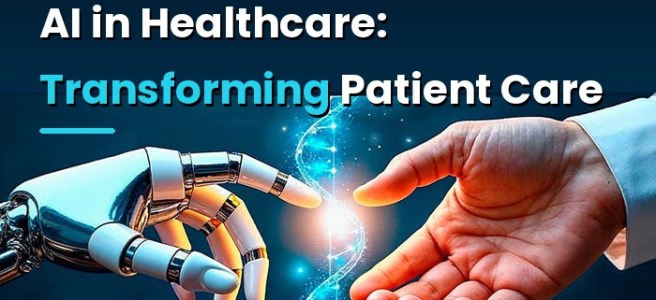
AI is transforming the landscape of healthcare through efficient interpretation of complex information, clinical decision-making, and provision of better care for patients. From imaging and disease detection to personalized treatment and monitoring, AI is increasingly becoming an integral part of the healthcare system. As a result, the AI in healthcare market has been witnessing growth in the adoption of these intelligent technologies at hospitals, diagnostic centres, pharmaceutical research, and even digital health. At the same time, other technologies like blockchain have emerged that can assist healthcare through better management of data, creating potential for blockchain in the healthcare market.
Learn more: Write for Us + AI
How AI is Transforming Medical Diagnostics
Artificial intelligence will revolutionize diagnostic procedures in terms of the capability of clinicians to examine vast amounts of clinical information at greater speed and with increased accuracy. Utilizing such innovations as machine learning, robotic process automation, natural language processing, deep learning, computer vision, and generative AI, it becomes possible to find links between medical images, laboratory tests, EHRs, and personal medical history. Thus, there is a shift in the application of artificial intelligence from mere processing of data to diagnosing patients. The growing market of AI applications in healthcare is facilitated by the widespread adoption of the technologies in hospitals, labs, radiology clinics, and other types of clinical institutions. Blockchain technology can be applied to ensure the safety of the diagnostic data shared on the network in the framework of the developing healthcare blockchain market.
AI-Powered Medical Imaging and Disease Detection
Computer vision and deep learning techniques have been employed to study various images in the medical imaging domain to identify anomalies which may require clinical attention. The convolutional neural network can analyse X-rays, CT, MRI, ultrasound, mammograms, and digital pathology scans. With the help of the AI technology, doctors will be able to identify tumours, fractures, lung problems, vascular problems, and other structural problems. In the case of oncology, AI models can be used to identify characteristics and suspicious abnormalities in lesions. The technique called radiomics can extract quantitative features from medical images which could be missed by regular human analysis of the images.
Predictive Analytics and Clinical Decision Support
In addition to image analysis, AI is capable of performing analysis of various kinds of clinical data to recognise relationships linked to the progress of the disease and the health outcomes of the patient. Machine learning, predictive analytics, natural language processing and LLMs will allow the handling of both structured and unstructured data, which may include doctors’ notes, laboratory values, medication history and diagnostic test results. With the help of an AI- driven clinical decision support system, healthcare providers can get access to all the relevant information that will assist in assessing diagnoses and deciding on further actions.
AI is Enabling More Personalized Patient Care
AI is bringing healthcare closer to providing more personalized treatment for each patient through consideration of patient-specific features and characteristics. With the help of clinical history, biomarkers, genomics, treatment response and lifestyle data, intelligent technology could provide an opportunity to discover treatment methods tailored to specific patient profiles. Machine learning, neural networks, reinforcement learning, and generative AI technologies will make this trend possible by deriving useful knowledge from diverse data sources. This trend creates new possibilities for the AI in healthcare market, especially for precision medicine and optimized therapies. In addition, a secure data architecture would be useful to link data provided by different healthcare stakeholders, where blockchain technology could facilitate this task and drive innovation in theblockchainin healthcare market.
Personalized Treatment and Precision Medicine
The concept of precision medicine is based on the use of individual data for making preventive, diagnostic and treatment-related decisions instead of the use of population-based approaches. With the help of AI algorithms, one can assess genomics, molecular biomarkers, medical history and treatment outcomes to detect patterns that correspond to therapeutic effects. Deep learning and supervised machine learning can help in interpreting large and complex genomic databases, and clustering algorithms can be useful in finding groups of patients with similar biological and clinical features. In the sphere of oncology, AI can assist in matching molecular characteristics with possible treatment options and predicting the effect of the therapy. In the field of pharmacotherapy, intelligent systems can analyse drug histories and clinical characteristics of patients to improve dosing and find undesirable treatment combinations.
Drug Discovery and Development with AI
AI is contributing to the field of drug discovery and treatment development by assisting researchers in assessing the biological targets, molecules, and drug candidates. Generative AI, graph neural networks, reinforcement learning, and molecular modelling algorithms can be used in compound design, prediction of molecular interactions, and selection of candidates for experimental testing. AI can also help with the repurposing of drugs, where researchers can test their existing drugs against new targets. In the clinical development stage, algorithms can help in recruiting participants, analysing clinical data, and finding patterns in the treatment response. All of this will help reduce the time needed for some processes and for analysing larger datasets for pharmaceutical and biotechnology companies.
Improved Patient Monitoring and Health Service Delivery through AI
Through AI, healthcare delivery can go beyond traditional clinical appointments by enabling constant observation, automation of data processing, and more proactive patient services. Smart systems will be able to analyse data received from smart devices, sensors, remote monitoring devices, and digital health apps. Technologies like edge AI, time-series analysis, speech recognition, computer vision, and Internet of Medical Things (IoMT) analytics can be used for detecting any changes in a patient’s health status and prompting interventions. This allows the development of other applications for the AI in healthcare market, especially at home and using digital health services. The blockchain-based system will allow for data exchanges between the authorized parties, helping with the blockchain in the healthcare market.
Remote Patient Monitoring and Wearable Technology
Information on vital signs such as the heart rate, blood oxygen level, glucose, body temperature, sleep, physical activity and blood pressure can be collected continuously through wearable technology and medical devices. The use of edge computing and time-series machine learning can process such data streams locally for rapid detection of changes that need to be noted, without the need to transfer all data to a central system. In the case of chronic illness patients, intelligent monitoring systems can enable health practitioners to keep track of patients between visits, while AI can detect any abnormal changes through personalized notifications. The integration of wearable technology with medical devices is helping improve the remote care model for healthcare providers to monitor their patients outside the hospital setting.
Virtual Assistants and AI-Enhanced Healthcare Services
AI-backed virtual assistants are transforming the patient experience with healthcare services and accessing them. Conversational AI, speech-to-text technology, natural language processing and generative AI may enable appointment booking, answering of health-related questions, patient data summarization, and navigation of healthcare services. Voice-enabled technology may render digital healthcare services easier to use, especially for those people who find regular text-based solutions challenging to use. Generative AI may help healthcare professionals summarise extensive clinical documentation and prepare data for consultation, enabling more time to be spent on communication with the patient. As these use cases grow, it will be possible for healthcare companies to develop more responsive digital channels with the help of blockchain -based identification and record management systems.
Artificial Intelligence in the Future of the Healthcare Industry
The future of the healthcare industry will see the integration of artificial intelligence in clinical, operational, and research activities. As the artificial intelligence in healthcare market evolves, new types of AI, such as multimodal AI, federated learning, digital twins, autonomous AI agents, and foundation models, will become part of the capabilities of healthcare organizations. These types of AI will allow analysis of different types of medical data at once and will make it possible to build hypothetical medical scenarios. Meanwhile, the infrastructure provided by blockchain will complement the capabilities of the blockchain in the healthcare market.
New Uses for AI in Healthcare
Multimodal AI is able to analyse medical images, clinical documentation, laboratory data, genomics data, and other types of data in a single analytical system. Federated learning makes it possible for AI models to learn from datasets located across different locations without the need to store the data at a central location. Digital twins can help build a virtual representation of the patient or any healthcare process in order to predict the consequences of various factors on the outcome of care delivery. AI agents also perform many digital tasks in parallel.
Collaboration Between Humans and AI in the Delivery of Healthcare Services
Healthcare in the future is most likely going to incorporate the collaboration between physicians and increasingly sophisticated AI solutions. Explainable AI (XAI) can be instrumental in enabling doctors to comprehend what affects the output of algorithms, while retrieval-augmented generation (RAG) is capable of linking generative AI to pertinent medical data. AI can thus operate as an analytical and informative partner for a professional who needs help in processing complicated evidence and assessing clinical scenarios. The use of blockchain-based infrastructure for data can ensure trust in collaboration and storage of verified data among involved organizations.
AI as a catalyst for Improved Healthcare Provision
AI is changing the landscape of healthcare through improved diagnoses, personalized care, patient monitoring, better operational effectiveness, and access to healthcare provision. Machine learning, deep learning, computer vision, generative AI, NLP and multimodal AI are some of the technologies that enable healthcare institutions to extract value from medical data. The growing AI in healthcare market is indicative of this change, while blockchain technology is helping with secure and traceable data exchange in connected healthcare systems, thus aiding the blockchain in healthcare market. According to Pristine Market Insights, further integration of AI and digital health technologies can facilitate this shift towards smarter and connected healthcare provision.
Author Bio: Teja Kurane is a Research Analyst with experience in researching emerging industry trends, market developments, and evolving business landscapes. With a keen interest in data-driven insights, Teja focuses on transforming complex information into clear, practical perspectives that help readers understand key market dynamics, opportunities, and future developments.

 Content Writing Agency in Delhi